
There is a particular kind of light that stops people in a room. Not the glare of a downlight or the flat wash of a panel, but a soft, internal glow that seems to come from within the wall itself. That glow is the signature of backlit alabaster, and in 2026 it has quietly become one of the most requested features in luxury Indian interiors — from grand foyers and dining rooms to hotel bars and spa walls.
For designers and homeowners alike, alabaster offers something rare: a material that is both architectural and emotional. It diffuses light into a warm, milky glow, reveals organic veining the moment it is lit, and turns an ordinary partition into a quiet focal point. This guide covers how backlit alabaster works, where it belongs, and how to specify it well.
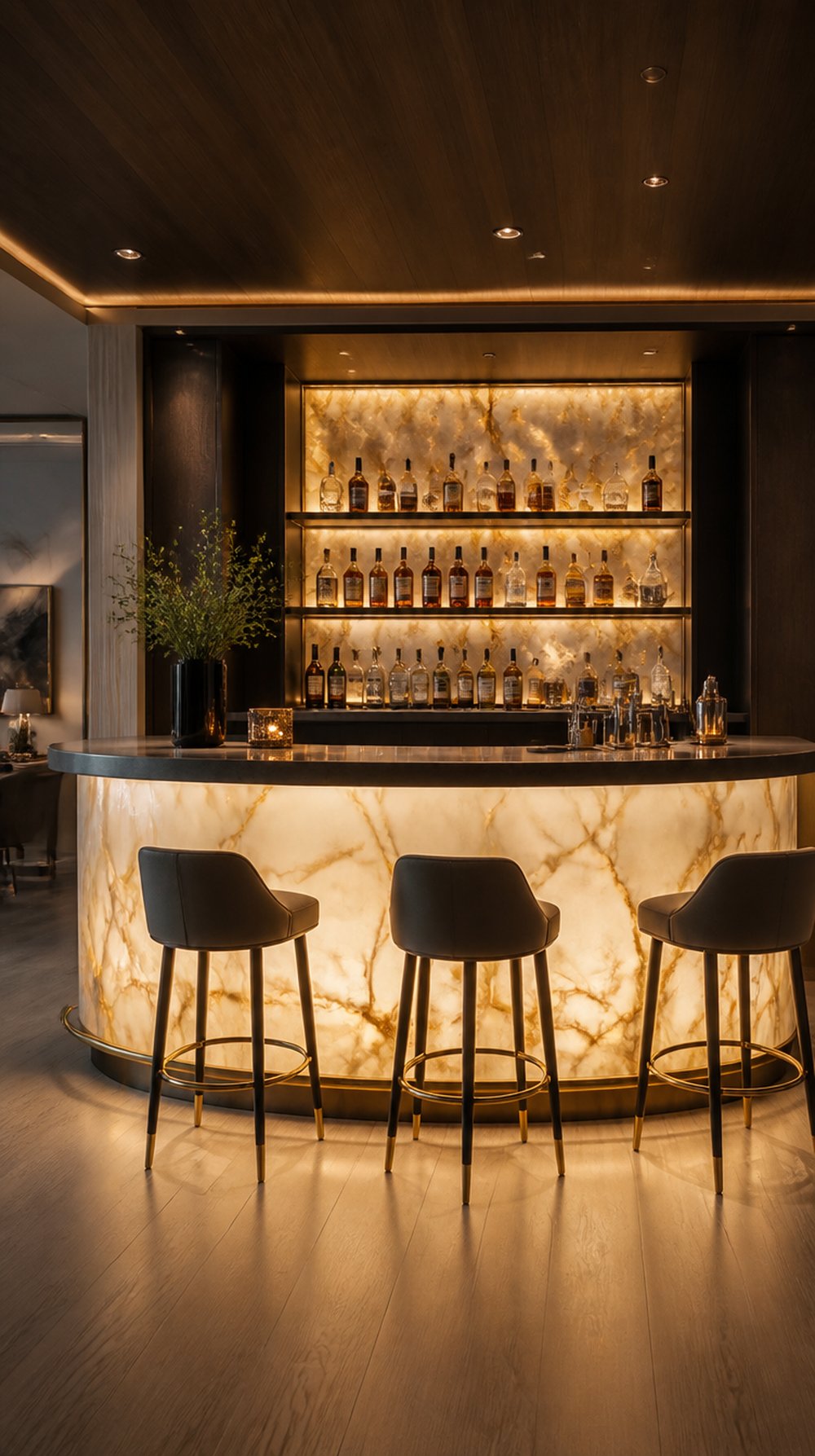
What makes alabaster glow
Alabaster is prized for being semi-translucent. Where marble blocks light, alabaster lets it pass through, scattering it gently so the surface appears to be lit from inside rather than from a fixture behind it. The result is a soft, even radiance with no hot spots — and the moment the light goes on, the stone’s veining, clouds and onyx-like striations come alive.
Natural alabaster is beautiful but demanding: it is heavy, brittle, sensitive to moisture, and difficult to source in consistent, large formats. This is why most contemporary projects in India now specify engineered alabaster sheets — translucent acrylic-resin panels that replicate the look and glow of natural stone while solving its practical problems. Urbane Decor’s alabaster range, including the Luxon Veil 2mm sheets, is built for exactly this: a faithful translucent surface that is lightweight, durable, waterproof and termite-proof, and far easier to install over large wall areas.
The 2026 look: light as material
The broader trend is clear. Across high-end residential, hospitality and retail interiors, designers are treating light as a material in its own right — and translucent stone is the canvas. Advances in slim, dimmable LED backlighting have made it practical to light entire walls, staircases, counters and ceilings with a consistent, controllable glow. The look reads as luxurious precisely because it is restrained: one glowing plane in an otherwise calm room does more than a dozen decorative elements.
What is changing in 2026 is the vocabulary of the stone itself. Cooler, cloud-like translucents create a serene, gallery-quiet mood, while dramatic onyx and crack-onyx patterns deliver depth and movement for bars, reception desks and statement headboards. Designers are pairing these surfaces with warm metals, fluted wood and stone floors to keep the glow feeling architectural rather than theatrical.
Choosing a pattern and finish
The pattern you select sets the entire mood of the wall, so it is worth matching it to the room’s intent:
Straight and cloud translucents read soft and contemporary — ideal for bedrooms, spas, and minimalist living rooms where you want ambience without distraction.
Onyx and exclusive onyx bring bold, painterly veining that becomes the hero of the space. These suit lobbies, bar fronts and dining feature walls where you want drama the moment the lights come on.
Crack onyx and pearl offer textured, layered character — a refined choice for boutique retail, hospitality and luxury entryways.
Urbane Decor’s alabaster collection spans these families — Straight, Cloud, Onyx, Exclusive Onyx, Crack Onyx and Pearl — so a designer can move from a quiet bedroom to a show-stopping bar within a single material language.
How to light it well
The lighting behind the panel matters as much as the panel itself. A few principles separate a polished result from an uneven one. Use an even, edge-to-edge LED source rather than spot fixtures, so the surface glows uniformly without bright patches. Slim LED sheets or closely spaced strips mounted on a back box are the reliable approach. Leave a consistent air gap — typically a few centimetres — between the LED layer and the alabaster so the light has room to diffuse before it reaches the surface. Choose a warm-to-neutral colour temperature (around 2700K–3500K) to flatter the stone’s natural tones; cooler light can make the glow feel clinical. Finally, put the wall on a dimmer — backlit alabaster is at its most beautiful when it can shift from a soft evening ambience to a brighter daytime presence.
Where backlit alabaster belongs
The most successful installations treat the glowing wall as a single, deliberate gesture. Favourite applications include feature and TV walls in living rooms, headboard walls in primary bedrooms, dining-room backdrops, home bars and counters, reception and lobby walls in offices and hotels, restaurant and spa interiors, and translucent partitions that divide space while letting light through. Because the engineered sheets are lightweight and moisture-resistant, they extend comfortably into areas where natural stone would struggle, including counters and humid zones.
Specifying it for a project
For designers and contractors, a few practical notes make specification smoother. Engineered alabaster sheets install faster and add far less structural load than natural stone, which simplifies both new builds and renovations. Plan the backlighting and electrical access into the wall build-up early — the air gap, LED layer and a maintenance path should be designed in, not retrofitted. And always review a lit sample on site: alabaster looks entirely different switched off versus switched on, and seeing the actual glow against the project’s other finishes is the surest way to commit with confidence.
Bringing it into your space
Backlit alabaster rewards restraint and good detailing — one luminous wall, thoughtfully lit, can define an entire room. If you are weighing it for a home, a hospitality fit-out or a retail concept, Urbane Decor can help you choose the right pattern, plan the lighting, and specify the panels for residential or trade projects.
To explore the alabaster range or request samples and bespoke sizing, send us a DM, write to mhdecollp@gmail.com, or enquire through urbanedecor.in — we work with homeowners, designers, architects and contractors across India.