
If you’ve spent any time browsing interior design accounts on Instagram or Pinterest in the past two years, you’ve almost certainly noticed it — the rise of the dark, dramatic feature wall. Charcoal wall panels are everywhere: luxury hotel lobbies, high-end Bangalore apartments, modern Mumbai homes. And the trend is only gaining momentum in 2026. Here’s why, and how to use it in your own home.

Charcoal panels create a dramatic, cocooning atmosphere in master bedrooms
What Are Charcoal Wall Panels?
Charcoal wall panels are decorative surface cladding panels in deep grey-black tones — ranging from mid-charcoal grey to near-black. They’re typically made from WPC (Wood Polymer Composite) or similar engineered materials and come in textured, fluted, or smooth profiles.
The colour palette isn’t just “dark grey” — quality charcoal panels have depth, with subtle undertones of brown, green, or blue that shift under different lighting conditions. This is what separates them from flat painted surfaces and makes them genuinely luxurious-looking.
At Urbane Decor, our charcoal wall panels are engineered for the Indian climate — resistant to humidity, UV fade, and the temperature swings that come with an Indian summer.
Why Is the Charcoal Trend Taking Off in Indian Interiors?
A few converging trends explain the charcoal wave in Indian homes:
- The hospitality look at home: Indians are increasingly inspired by luxury hotel interiors — and dark panelled walls are a signature of five-star spaces. Charcoal panels let you recreate that look in a residential setting for a fraction of the cost of bespoke joinery.
- The influence of Japandi and Wabi-sabi: These Japanese-Scandinavian design philosophies embrace imperfection, muted tones, and natural textures. Charcoal fits perfectly within this palette and resonates with a younger, design-aware Indian audience.
- The “jewel box” bedroom trend: Interior designers are increasingly recommending dark feature walls in bedrooms to create a cocooning, intimate atmosphere. A charcoal panel headboard wall with warm lighting creates exactly this effect.
- Social media aesthetics: Dark walls photograph beautifully. In an era where homeowners share their interiors online, charcoal-panelled spaces get far more engagement than conventional off-white rooms.
Best Rooms for Charcoal Wall Panels in Indian Homes
Master Bedroom Headboard Wall
This is the single most popular application. A charcoal fluted panel wall behind the bed, paired with warm brass light fixtures and linen bedding, transforms an ordinary bedroom into something that looks like it belongs in Architectural Digest. The dark wall visually anchors the bed and makes the room feel intentional and curated.
Living Room TV Unit Wall
A charcoal panel wall behind the television instantly elevates the living room. The dark background makes screens appear to pop, reduces glare, and creates a dedicated “media zone” that feels designed rather than accidental. Pair with floating shelves in light wood for contrast.
Home Bar or Dining Feature Wall
Dark walls and drinks go together in the best possible way. A charcoal panel backdrop behind a home bar or sideboard gives the space a moody, sophisticated atmosphere. Add downlights or a slim LED strip at the top of the panels for a dramatic effect.
Home Office Statement Wall
For video calls, a dark panelled wall behind you is miles better than a cluttered bookshelf. It signals professionalism and design taste simultaneously — and it’s become a recognisable “success signal” in the Indian WFH economy.
Hotel and Commercial Spaces
Restaurant feature walls, hotel lobby pillars, café interiors — charcoal panels are the go-to choice for hospitality designers looking for high-impact finishes that hold up to heavy use and daily cleaning.

Installed charcoal panels — the headboard wall effect in a real Indian home
How to Style Charcoal Panels Without Making a Room Feel Small
The most common concern we hear: “Won’t dark panels make my room look smaller?” The honest answer: only if you do it wrong. Here’s how to get it right:
- Use charcoal on ONE wall only — the accent wall rule applies even more strongly with dark colours. One charcoal wall and three light walls will feel bold and sophisticated, not oppressive.
- Layer lighting — dark panels need good lighting to really sing. Wall sconces, recessed spotlights aimed at the panels, or an LED strip along the skirting all work brilliantly. Lighting a dark wall from the side creates beautiful shadows in the texture.
- Contrast with light furniture — white or cream upholstery, light wood floors, and off-white or cream ceilings all provide the contrast that makes a charcoal wall feel intentional rather than gloomy.
- Add warm metal accents — brass, gold, or copper accessories sing against charcoal. A simple brass table lamp or gold-framed mirror on a charcoal panel wall looks effortlessly luxurious.
- Don’t use cold white lighting — warm white (2700K–3000K) bulbs make charcoal walls feel rich and cosy. Cool white LEDs make the same wall feel clinical and cold.
Charcoal Panels vs Dark Paint: Why Panels Win
You might be wondering: why not just paint a wall dark charcoal? It’s cheaper, right? Yes — initially. But wall panels offer significant advantages:
| Factor | Dark Paint | Charcoal Panels |
|---|---|---|
| Texture & depth | Flat | ✓ Dimensional, catches light |
| Durability | Scuffs, requires repainting every 2–3 years | ✓ 10+ year lifespan, easy to clean |
| Humidity resistance | Peels and bubbles in humid climates | ✓ Fully resistant |
| Visual premium | Looks painted | ✓ Looks like high-end joinery |
| Cost over 10 years | Low upfront, higher long-term | ✓ Better value long-term |
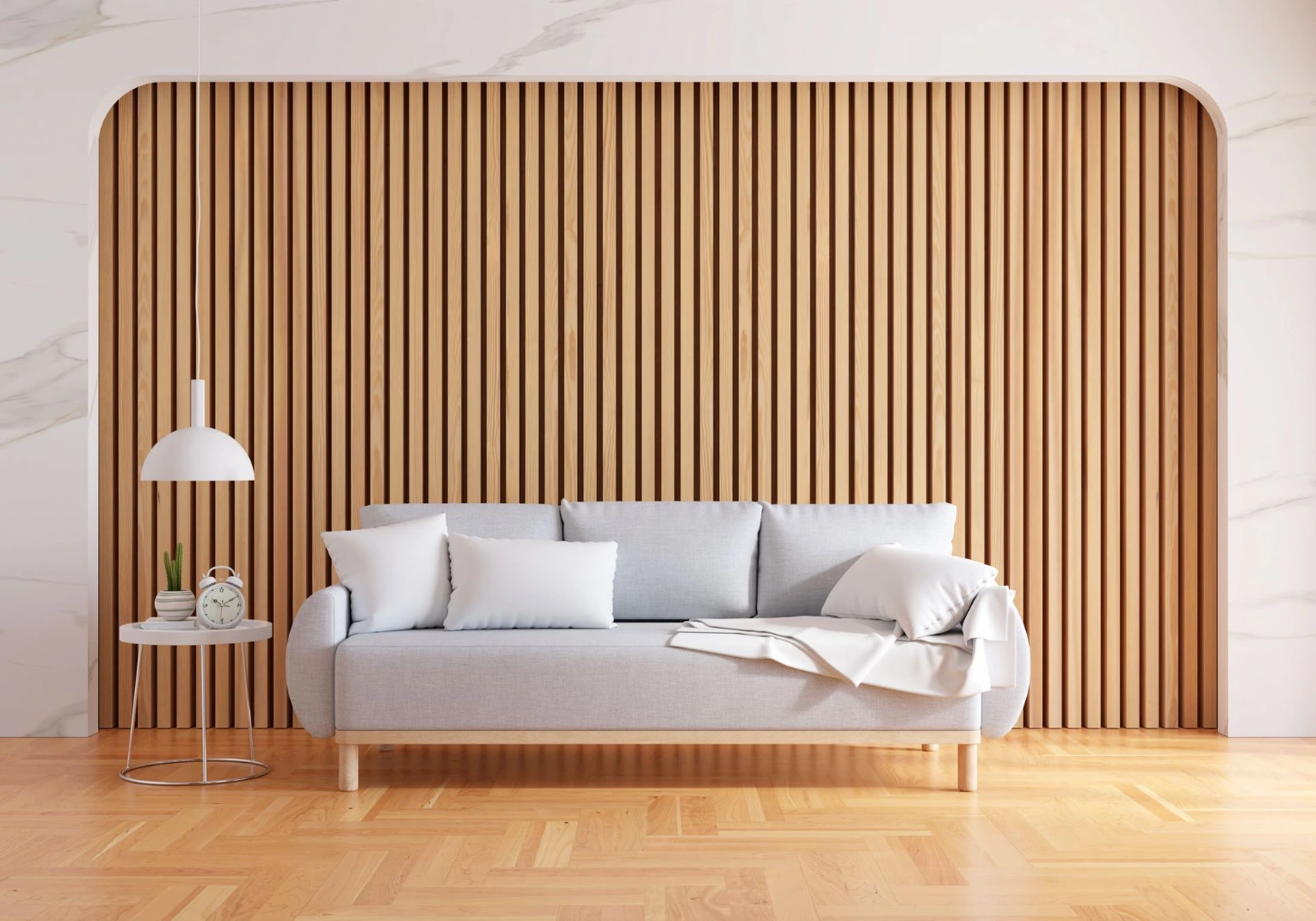
Dark panels with warm accent lighting — the contrast that makes charcoal walls work
Is the Charcoal Trend Here to Stay?
Some design trends burn bright and fade fast. Charcoal is not one of them. Here’s why it has staying power:
Firstly, dark walls have been a fixture of high-end architecture for decades — from Victorian libraries to Japanese ryokans. They’re not a 2024 Instagram invention. The current wave is a democratisation of a timeless luxury aesthetic, made accessible by affordable panel materials.
Secondly, as Indian homes get smaller in urban areas (and therefore require smarter design choices), a single dramatic feature wall delivers enormous visual impact relative to cost and effort. It’s efficient luxury.
Finally, charcoal is incredibly versatile as a neutral. It works with warm timber, with white marble, with soft blush, with brass, with terracotta. This adaptability means it doesn’t clash with the rest of a design — it enhances it.
The Charcoal Design Formula That Always Works
If you’re going to try one charcoal panel wall and you want it to look like a professional interior designer did it, follow this formula:
- One charcoal fluted panel wall (behind bed, sofa, or TV)
- Warm white lighting (2700K) — one spotlight per panel, or a continuous LED strip above
- One brass or gold accent (lamp, mirror frame, or handle)
- Light-coloured furniture or bedding in cream, white, or warm beige
- A natural material element (rattan, linen, stone, wood)
“You can’t go wrong with this combination in any room size.”
Ready to Go Dark?
Charcoal wall panels are one of the highest-impact, lowest-regret design moves you can make in a modern Indian home. They’re durable, photogenic, versatile, and genuinely luxurious-looking when done right.
Explore our full range of charcoal wall panels or check out our WPC flexible louvers in dark finishes. Both ship pan-India from our Bangalore warehouse.
Want to see how charcoal panels would look in your space?
Share your room dimensions and photos and we’ll send you personalised recommendations and a quote.
Get a Free QuoteFrequently asked questions
Are charcoal wall panels waterproof?
Yes. Charcoal wall panels are waterproof and termite-proof, so they suit living rooms, bedrooms, receptions and even moisture-prone areas.
What are charcoal wall panels made of?
They are made from a blend of bamboo and wood fibre with polymer (a charcoal composite), giving a warm matte finish that is strong, low-maintenance and eco-friendly.
Where are charcoal wall panels best used?
TV and feature walls, bedroom headboards, office receptions and accent walls — anywhere you want a warm, fluted, contemporary look.
How much do charcoal wall panels cost?
Charcoal wall panels start from around ₹200/sq ft at Urbane Decor, with free samples available across India.
Do charcoal wall panels fade?
No. They are designed to resist fading, scratching and moisture, keeping their finish for years with only minimal wipe-clean upkeep.