
Wall panels are sold as "fit and forget", and mostly they are. But real homes ask real questions a year later: can I paint over this colour, how do I cut a panel around a new switch, what do I clean it with, and can I take it down when I move? The honest answer changes with the material. This guide answers all four questions for all twelve materials we supply, in one place.
Paint: almost never. Panels come with a finished, printed or coated face, and paint grips it poorly; only natural rattan cane takes stain or paint well. Cut: yes, every panel can be cut to size. PVC, WPC, charcoal and louvers cut with a fine-tooth saw, thin clay and flexible sheets with a sharp blade, rattan with scissors; ACP and alabaster are best cut by a fabricator. Clean: a soft damp cloth and mild soap, then wipe dry. No thinner, acetone, bleach or scouring pads. Remove and reuse: panels fixed on battens or clips usually come off and go up again; panels bonded with adhesive rarely survive. For anything unusual, test on an offcut first.
Paint, cut, clean, reuse: the matrix for all 12 materials
Read across for your material. Gold means go ahead, a dashed chip means "possible, with care", and terracotta means do not.
| Material | Paint it? | Cut it with | Clean it with | Remove and reuse? |
|---|---|---|---|---|
| PVC panels (Clvin) | Not advised | Fine-tooth saw or knife | Damp cloth, mild soap | If on battens |
| WPC and fluted WPC (Wudonn) | Not advised | Fine-tooth saw | Cloth along the groove | If on battens |
| Charcoal panels | No | Fine-tooth saw | Damp cloth, no solvents | If on battens |
| Louvers, rigid and flexible | No | Fine-tooth saw | Soft brush in grooves | Rigid, if on battens |
| ACP (aluminium composite) | No | Fabricator saw or router | Soapy water, rinse | If mechanically fixed |
| UV marble sheets | No | Fine-tooth saw, scoring blade | Damp microfibre | Rarely |
| SPC wall panels | No | Fine-tooth saw or jigsaw | Damp cloth, mild soap | Rarely |
| Acrylic sheets | No | Fine blade, film on | Water only, soft cloth | If screwed or framed |
| PU stone panels | Touch-ups only | Fine-tooth saw | Soft brush, damp cloth | Rarely |
| Alabaster sheets | Never | Fabricator, stone tools | Soft damp cloth only | If frame-mounted |
| SOFTIQ clay panels | No | Ordinary sharp blade | Dry dust, barely damp | No |
| Rattan cane webbing | Yes, stain or paint | Scissors or blade | Soft brush, keep dry | Yes, if stapled or beaded |
General guidance for interior use. Where a product comes with its own instruction sheet, that sheet wins. When in doubt, test on an offcut first, or WhatsApp us a photo.
Pick your material: the care card for each one
Tap a material to see only its card. Each card carries the four answers, the do and do-not chips, and where the product belongs.
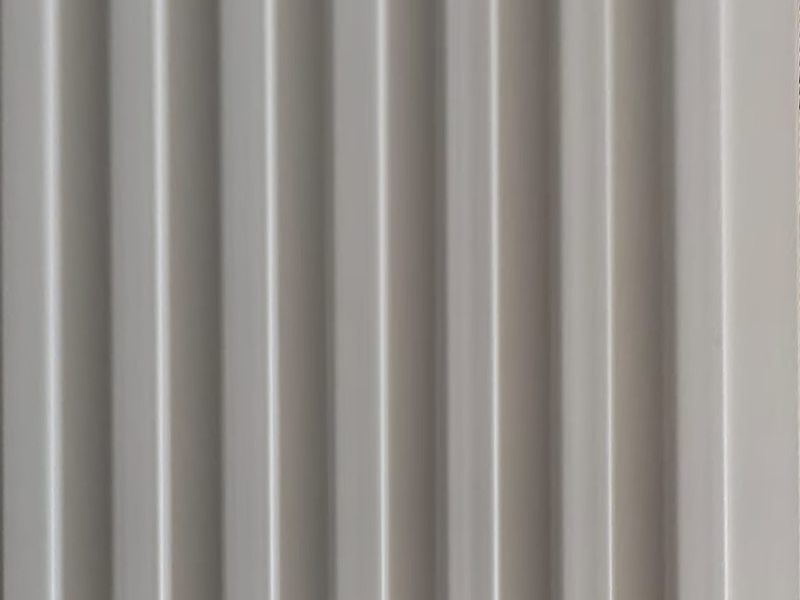
PVC panels (Clvin)
- Paint
- Not advised. Paint struggles to grip the smooth printed face. If you must, test a plastic primer on an offcut first.
- Cut
- Fine-tooth hand saw, or score with a sharp knife and snap thin sections.
- Clean
- Damp cloth and mild soap. Solvent cleaners can dull the print.
- Reuse
- Yes if clipped or screwed to battens; rarely if glued.
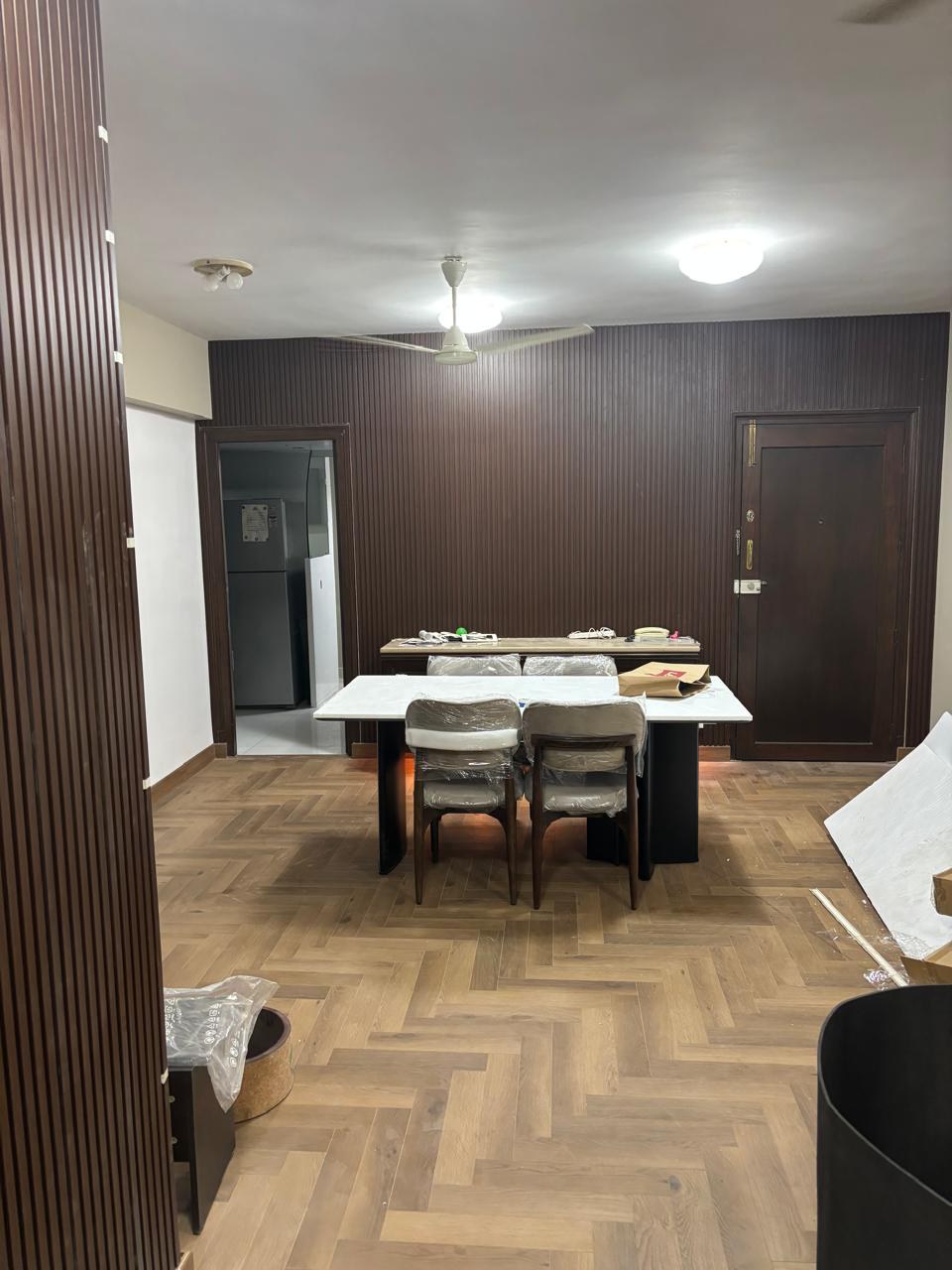
WPC and fluted WPC (Wudonn)
- Paint
- Not advised. The woodgrain face is the product, and paint pools in the grooves. Choose another finish instead.
- Cut
- Fine-tooth hand saw or circular saw, cutting from the back face so the front edge stays crisp.
- Clean
- Run a damp cloth along the groove, not across it. A soft brush lifts dust from the flutes.
- Reuse
- Yes if on battens; rarely if bonded.
Charcoal panels
- Paint
- No. The core is polystyrene with charcoal, and solvent-based paints and thinners can attack it.
- Cut
- An ordinary fine-tooth saw. Support the sheet fully so it does not flex while you cut.
- Clean
- Damp cloth and mild soap. Never solvents.
- Reuse
- Yes if on battens; rarely if bonded.
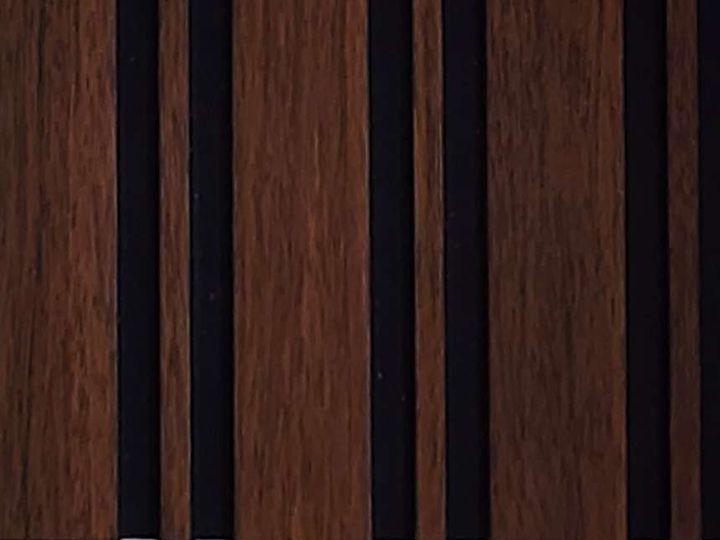
Louvers, rigid and flexible
- Paint
- No. Deep grooves make an even coat almost impossible, and the factory finish is the point.
- Cut
- Fine-tooth saw across the plank. Flexible slats also trim with a sharp blade. Cut the last plank lengthwise along a groove.
- Clean
- Soft brush or a vacuum brush down the grooves, then a damp cloth.
- Reuse
- Rigid planks on battens or clips: yes. Flexible slats are bonded one by one, so no.
ACP (aluminium composite)
- Paint
- No. The coil-coated face is baked on at the factory. Site paint will not match it, so replace a damaged tray instead.
- Cut
- Best done by the fabricator on a panel saw or router, which also makes the fold grooves. Short straight cuts by hand are possible but leave a rough edge.
- Clean
- Mild soapy water and a soft sponge. On a facade, an occasional gentle rinse clears the dust film.
- Reuse
- Mechanically fixed trays can come off, but they are made to one size.
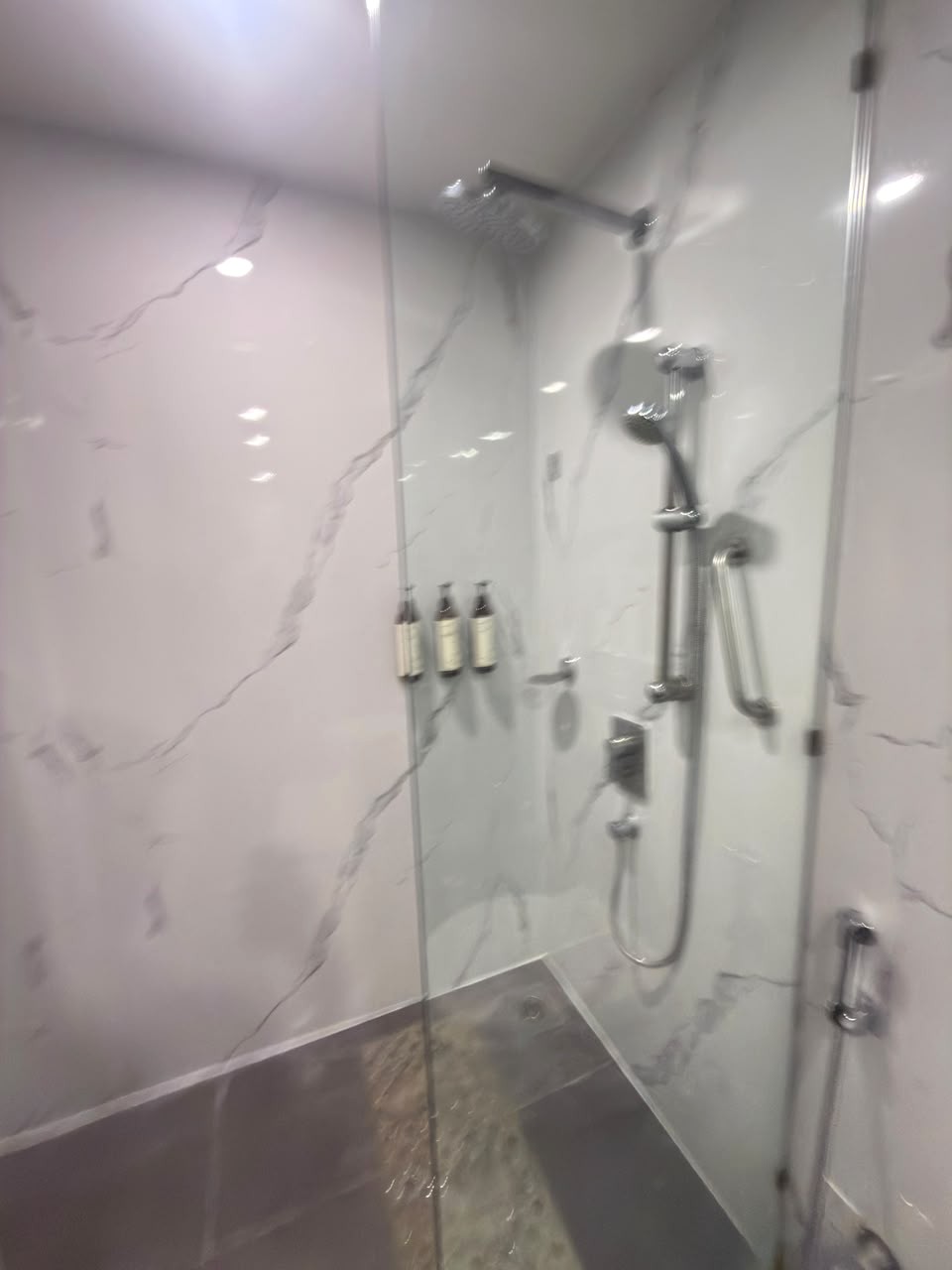
UV marble sheets
- Paint
- No. The hard UV-cured gloss is the finish, and paint will not key to it.
- Cut
- Fine-tooth saw or a scoring blade. Tape the cut line and go slowly to protect the gloss.
- Clean
- Damp microfibre, then a dry one. No scouring pads; gloss shows scratches.
- Reuse
- Rarely. Sheets are bonded, so a damaged sheet is replaced.
SPC wall panels
- Paint
- No. The printed stone face has a wear layer that paint does not grip.
- Cut
- Fine-tooth saw or jigsaw. The mineral core is dense, so use a sharp blade and let the tool do the work.
- Clean
- Damp cloth and mild soap. No grout lines to scrub.
- Reuse
- Rarely. Bonded sheets with sealed joints are not made to come off.
Acrylic sheets
- Paint
- No. It defeats the deep gloss you paid for.
- Cut
- Fine-tooth blade at low speed, with the protective film left on until the sheet is fixed. Test on an offcut first.
- Clean
- Soft cloth with water, or a dedicated acrylic cleaner. Never an ammonia glass spray, which can craze acrylic over time.
- Reuse
- Yes if screwed or framed; no if bonded.
PU stone panels
- Paint
- Not the whole face. Colour touch-ups at joints are sometimes done at installation; ask us first and test on an offcut.
- Cut
- Fine-tooth saw. The panel is light, so clamp it gently and cut from the face side.
- Clean
- Soft brush over the rock texture, then a damp cloth with mild soap.
- Reuse
- Rarely. Bonded panels tend to tear at the back.
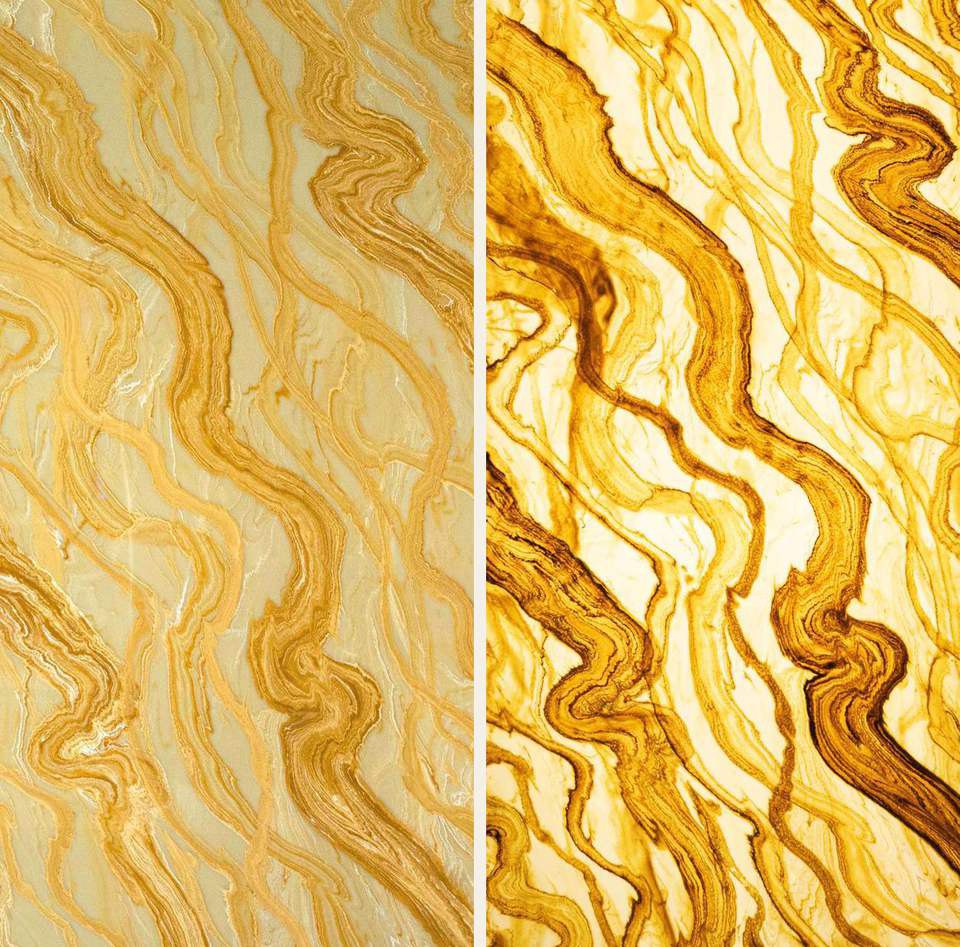
Alabaster sheets
- Paint
- Never. Paint blocks the light, and the glow is the whole reason to buy it.
- Cut
- We supply sheets cut to size. Site cuts are a fabricator's job with stone-cutting tools.
- Clean
- Soft damp cloth, wiped dry. No lemon, vinegar or acidic cleaners.
- Reuse
- Frame-mounted sheets can be lifted out; bonded sheets cannot.
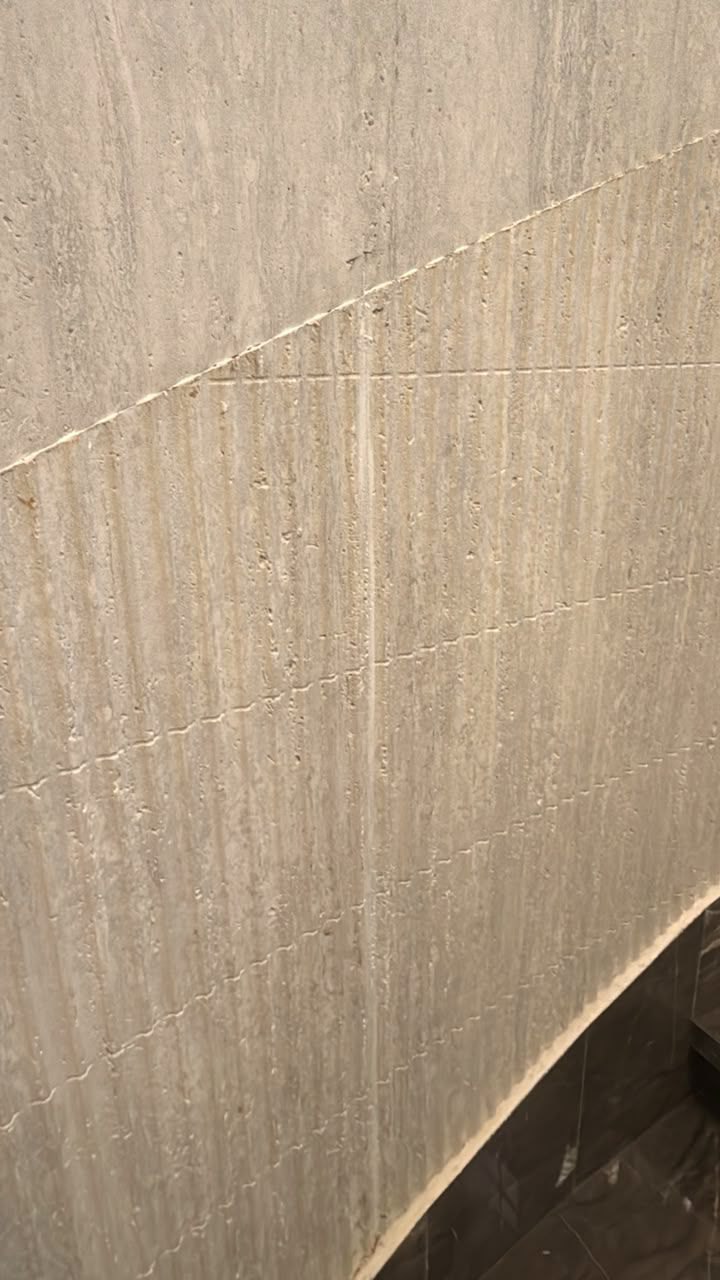
SOFTIQ clay panels
- Paint
- No. The texture and colour are in the clay itself, and paint flattens both.
- Cut
- An ordinary sharp blade and a straight edge. No wet cutting, almost no dust.
- Clean
- Dust dry, or wipe with a barely damp cloth. Keep it out of constant water.
- Reuse
- No. It is a thin bonded panel.
Rattan cane webbing
- Paint
- Yes. Natural cane takes stain or thin coats of spray paint. Test on an offcut, because cane darkens more than you expect.
- Cut
- Scissors or a blade, leaving a small overlap to tuck under the beading.
- Clean
- Soft brush or vacuum brush. A light mist of water can re-tension a weave that has slackened.
- Reuse
- Yes if stapled or held by beading; lift the beading and re-fix.
Can wall panels be painted?
Technically, some can. Practically, we advise against it for every panel except rattan, and it helps to know why before you buy a tin of paint.
- The face is already a finish. PVC, WPC, charcoal, SPC and UV marble carry a printed or coated layer made in controlled conditions. Wall emulsion is made for porous plaster. On a smooth, non-porous face it can peel in sheets.
- Grooves hide mistakes badly. On fluted panels and louvers, paint pools at the bottom of each groove and thins on each edge. The wall ends up looking like a painted wall, not a panelled one.
- Some cores dislike solvents. Charcoal panels have a polystyrene core. Solvent-based paints, thinners and some spray cans can soften it.
- It cannot be undone. Our warranty covers the panel as supplied. If you are thinking of painting, ask us first so you know where you stand.
If the colour is the problem, there are better routes: replace only the strips that bother you, or re-panel that one wall. Panels start from ₹99 per sq ft (ACP from ₹75), so a single feature wall is rarely a big number. The price list has every range.
Should I paint the wall before panelling? There is no need for a finish coat behind panels. What matters is that the wall is dry, sound and free of flaking paint. Our guide to installing panels over tiles or painted walls covers the preparation.
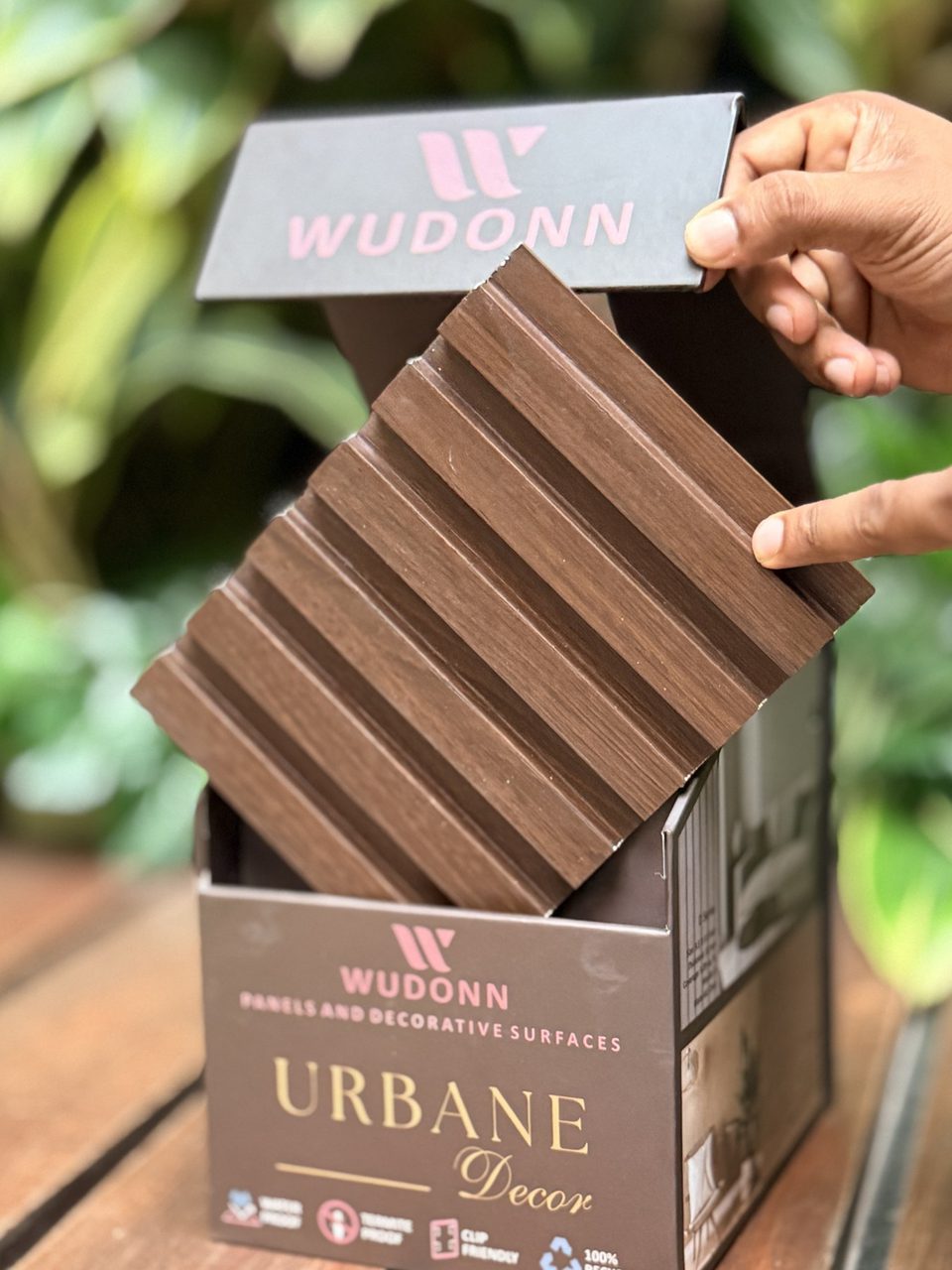
The offcut test, in four steps
- Keep the offcuts. Every installation leaves a few. Store two or three flat behind a wardrobe.
- Try it there first. A new cleaner, a primer, a different blade: use it on the offcut, on the face side.
- Wait a day. Some damage, such as dulling, softening or crazing, shows only after the surface dries.
- Check in daylight. Tilt the piece to the window. If the sheen has changed, do not use it on the wall.
No offcut? Use a corner that furniture will hide, or ask us for a sample piece of the same finish.
How to cut wall panels (yes, they can be cut to size)
Every panel we supply can be cut to fit the wall, and most are cut on site in minutes. The skill is in choosing the right tool for the core and in planning where the cut falls. Our installers plan every cut before the first panel goes up, because a wall that looks effortless has usually been measured three times.
Scissors
For woven sheets on a roll.
Sharp utility knife
Score against a steel straight edge, in several light passes.
Fine-tooth hand saw
The everyday tool. Many small teeth give a clean edge.
Jigsaw or circular saw
Fine blade, low speed. For long cuts and switch cut-outs.
Fabricator or CNC
Cut and grooved in a workshop to your drawing.
Which tool for which material. On gloss sheets, tape the cut line and leave the protective film on until the sheet is fixed.
How to cut a panel around a switch or socket
- Switch off and measure. Turn off the circuit. Measure from the last fixed panel and from the floor to each side of the switch box.
- Mark on the back. Transfer the box outline to the back face of the panel. Remember the outline is mirrored.
- Drill a pilot hole. One hole inside each corner of the outline gives the blade a place to start.
- Cut slightly tight. Use a fine-tooth blade or a jigsaw at low speed. The switch plate covers a 2 to 3 mm margin, so ease the opening to fit.
- Dry fit before adhesive. Offer the panel up, check the opening, then fix it.
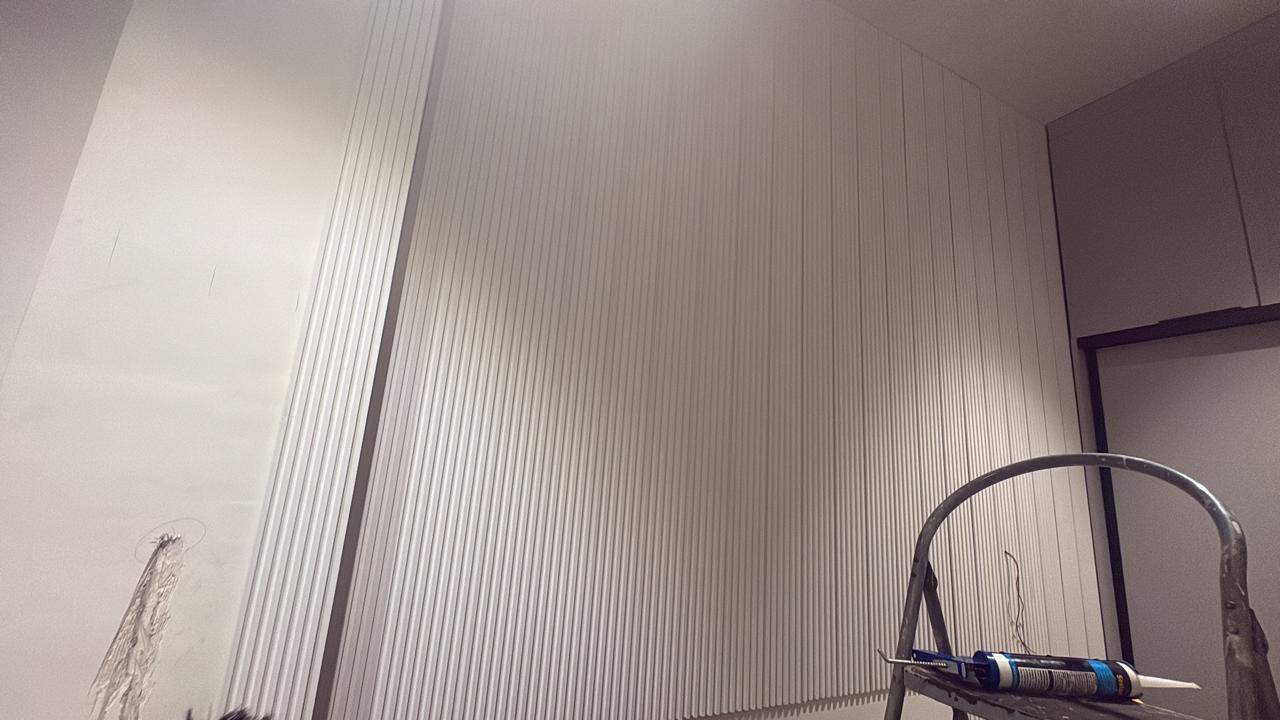
Wear eye protection and a dust mask, support the full sheet on a flat surface, and keep fingers behind the blade. Cut outdoors or by a window where you can. For the full fitting sequence, see our step-by-step installation guide.
How to clean wall panels, by material
One routine covers almost everything we make. It takes a few minutes a month, and it is the same routine our care page gives for every range.
- Dust first. A dry microfibre cloth on flat panels; a soft brush or a vacuum brush down the grooves of fluted panels and louvers.
- Wipe with mild soap. A few drops of dish soap in a bowl of water. Wring the cloth until it is damp, not wet.
- Follow the groove. On fluted and charcoal profiles, wipe along the groove, never across it.
- Wipe dry. Dry the surface, and pay attention to joints and cut edges. Standing water belongs nowhere on a wall.
- Test anything new. A new spray or cleaner goes on an offcut or a hidden corner first.
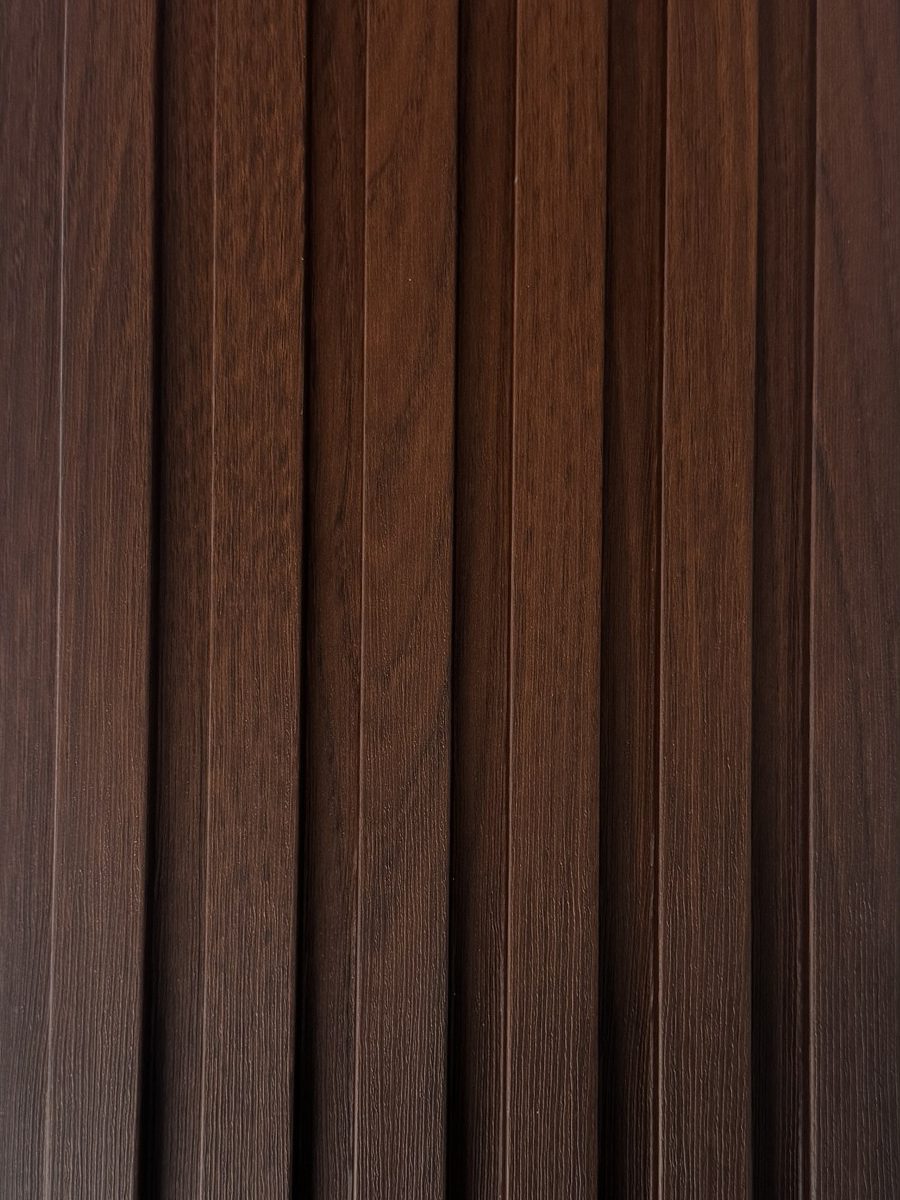
Is a fluted panel hard to clean?
No, but it is cleaned differently from a flat wall. Dust settles in the grooves, so a quick monthly pass with a soft brush or the brush head of a vacuum cleaner does most of the work. Follow with a damp cloth along the groove only when there are marks.
What never to use
These dull or attack the surface layer. Damage from abrasive or solvent cleaning is not covered by the warranty, so the gentle routine protects the wall twice.
Wet areas: where each material belongs
SPC and UV marble. Wipe down after use, and re-seal any silicone joint that lifts.
PVC panels. Fully wipe-clean. Keep every panel away from direct flame and high heat.
WPC, charcoal, louvers. Living rooms, bedrooms, lobbies. Not inside a shower.
Alabaster, rattan, PU stone and SOFTIQ clay. A damp wipe is fine. Constant water is not.
ACP. Rinse a facade gently once in a while to clear the dust film. Charcoal can go on a balcony, not on a facade.
Stain rescue: what to try first, and what never to reach for
| The mark | Try this first | If it stays | Never |
|---|---|---|---|
| Dust in grooves | Soft brush or vacuum brush, top to bottom | Damp cloth along the groove | Wiping across the flutes |
| Fingerprints on gloss | Damp microfibre, then a dry one | A drop of mild soap in the water | Dry paper towel on a dusty sheet |
| Kitchen grease | Warm water with dish soap, wipe twice | Leave the soapy cloth on the spot for a minute, then wipe | Scouring pads or oven cleaner |
| Tape or sticker residue | Roll it off with a fingertip | Warm soapy cloth, patiently | Thinner, acetone or a blade |
| Pen or crayon | Mild soap on a damp cloth | Send us a photo before trying anything stronger | Nail polish remover |
| Hard-water marks | Wipe the wall dry after each shower | Mild soap; test any descaler on an offcut | Acid cleaners left on the surface |
| Dust film on a facade | Gentle rinse with clean water | Soft sponge and mild soapy water | A pressure jet aimed at joints |
Sticky tape is hard on painted walls too. See why cello tape damages walls.
A mark that will not shift, or a cut you are unsure of? WhatsApp a close-up and a wide shot of the wall. We will tell you what it is and what to try.
WhatsApp +91 93243 69051Can wall panels be removed and reused?
It depends almost entirely on how they were fixed, not on what they are made of. That is worth deciding before installation, especially in a rented home or a shop you may refit in a few years.
How to remove panels fixed on battens
- Start at the trim. Remove the end cap or corner trim on the side where the last panel went in.
- Work backwards. Panels come off in the reverse order they went on. Unscrew or unclip the last panel first.
- Lift, do not lever. Slide each panel out of the tongue of its neighbour. Levering against the face marks it.
- Number the backs. A pencil number on each panel keeps the grain and the cuts in order for the new wall.
- Store flat. Stack panels face to face, flat on the floor, away from sun and heat.
Does wall panelling damage the wall behind?
Batten-fixed panels leave small screw holes that fill and paint over in an afternoon. Bonded panels leave adhesive on the plaster and usually pull some paint, so plan a patch and a repaint for that wall. Neither harms a sound wall structurally. The damage people actually regret comes from panelling over a damp wall: the panel hides the damp, and the damp keeps working. Fix seepage first; our troubleshooting page explains what to look for.
Ask for batten fixing
Slightly more work on day one, and the panels can move with you.
Direct bonding is fine
Slim, quick and solid. Keep two or three spare planks for repairs.
Replace the strip
Strip panels and louvers are swapped one at a time, not wall by wall.
Re-panel, do not paint
A new finish on one wall looks better than paint over the old one.
Five myths about looking after wall panels
"Any panel can be repainted like a wall"
A panel face is a finished, non-porous layer. Wall paint peels from it, and on fluted profiles it pools in the grooves.
"A stronger cleaner cleans better"
Thinner, acetone and bleach remove the mark and the finish together. Mild soap and patience remove only the mark.
"Waterproof means it can go anywhere"
A waterproof core does not make a joint watertight. Showers need the right material and sealed joints.
"You need power tools to cut panels"
Most panels cut with a fine-tooth hand saw or a sharp blade. Only ACP and alabaster really want a workshop.
"Once fixed, panels are there for ever"
Only if they are glued. Panels on battens come off, move house and go up again.
Wall panel paint, cutting aur safai: seedha jawab
Paint: wall panel par paint mat kijiye; sirf rattan cane par stain ya paint theek rehta hai. Cutting: PVC, WPC, charcoal aur louvers baareek daant wali aari se kat jaate hain; SOFTIQ aur flexible louvers tez blade se; rattan kainchi se. Safai: geela nahi, sirf halka nam kapda aur thoda sa mild soap, phir sukha kapda. Thinner, acetone, bleach aur steel wool kabhi nahi. Dobara lagana: batten par lage panel nikal kar phir lag sakte hain; adhesive se chipke panel aksar nahi bachte. Koi naya cleaner ho to pehle ek bache hue tukde par test kijiye.
- Do not paint wall panels. Rattan cane is the one exception; for everything else, replace or re-panel.
- Every panel can be cut to size. A fine-tooth saw handles most; ACP and alabaster go to a fabricator.
- Clean with a damp cloth and mild soap, along the groove, and wipe dry. No solvents, no abrasives.
- Panels on battens can be removed and reused. Bonded panels are permanent.
- Test anything new on an offcut first.
Not sure what your wall can take? Ask before you try.
Urbane Decor is an architectural surfaces brand for interiors and exteriors, with 2,400+ projects since 2024. Send a photo of the wall and tell us what you want to do: clean a mark, cut for a new switch, take a wall down or change the finish. We will tell you what is safe for that material. Every panel carries a 6-year warranty, and ACP carries 6 to 10 years depending on the grade selected.
Orders are dispatched within 24 working hours and reach most of India in 5 to 6 days, the same day in Mumbai, and we ship worldwide. Architects, designers and contractors get free samples, and homeowners can ask for a sample box, dispatched within 2 working days. Browse all our catalogues →
WhatsApp +91 93243 69051Paint, cut, clean, reuse: quick answers
Can PVC wall panels be painted?
It is possible but not advised. PVC panels have a smooth printed face that ordinary wall paint grips poorly, so it can peel. If you must, test a plastic primer and paint on an offcut first. Replacing the panels gives a better result.
Can WPC louvers and fluted panels be painted?
We do not recommend it. Paint pools in the grooves and thins on the edges, so the finish looks uneven, and the factory woodgrain is lost. Choose a different finish or replace the planks instead.
Can charcoal panels be painted?
No. Charcoal panels have a polystyrene core with a printed face. Solvent-based paints and thinners can attack the core, and water-based paint does not grip the face well.
How do I cut PVC wall panels by hand?
Mark the line on the back, support the panel on a flat surface and cut with a fine-tooth hand saw. Thin sections can be scored with a sharp knife against a steel rule and snapped. Smooth the edge and hide it under a trim.
How do I cut a charcoal panel or a fluted panel?
Use an ordinary fine-tooth saw, cutting from the back face so the front edge stays clean. Plan the last panel so the lengthwise cut falls in a groove, and cover cut edges with matching trims.
How do I cut an ACP sheet?
ACP is best cut by a fabricator on a panel saw or router, which also cuts the grooves for folding. A short straight cut by hand is possible but leaves a rough edge. Send the fabricator your elevation drawing.
How do I cut a UV marble sheet?
Use a fine-tooth saw or a scoring blade. Tape the cut line, keep the protective film on and cut slowly so the gloss face does not chip. Try the blade on an offcut first.
How do I clean PVC wall panels?
Dust them, then wipe with a soft cloth dampened in water with a little mild soap, and wipe dry. Avoid thinner, acetone, bleach and scouring pads, which dull the printed layer.
How do I clean WPC louvers and fluted panels?
Run a soft brush or a vacuum brush down the grooves to lift dust, then wipe along the groove with a damp cloth and mild soap. Do not wipe across the flutes and do not soak the wall.
How do I clean a UV marble sheet?
Wipe with a damp microfibre cloth and buff dry with a second one. Do not use scouring pads or powders, because a gloss face shows scratches, and avoid acidic cleaners such as lemon or vinegar.
How do I clean an ACP sheet?
Use mild soapy water and a soft sponge, then rinse. On an exterior facade, an occasional gentle rinse clears dust and pollution film. Do not aim a pressure jet at the joints.
Can wall panels be removed and reused?
Yes, if they were screwed or clipped to a batten frame: they can be taken off in reverse order and refitted. Panels bonded directly to the wall with adhesive rarely survive removal intact.
Does wall panelling damage walls?
Batten-fixed panels leave small screw holes that are easy to fill. Bonded panels leave adhesive and usually pull some paint, so that wall needs patching and repainting. Neither harms a sound wall structurally.
Can you stain rattan cane webbing?
Yes. Natural rattan cane takes wood stain or thin coats of spray paint. Test on an offcut first, since cane darkens quickly, and let it dry fully before fixing.
Keep reading
Shop: PVC · WPC · charcoal · louvers · ACP · UV marble · SPC · real installations